
Find Us Our Location
- Plot no.1, Gali No.1, Gemini park, Nangli Sakrawati Najafgarh, New Delhi 110043
- [email protected]
- +91-9810765783

If you run a manufacturing unit, a packaging line, or any setup that depends on motors, you already know how much an AC drive matters. It's the small but mighty component that controls motor speed, manages torque, and keeps your entire production line running smoothly. And when it fails, everything else grinds to a halt with it.
Over the years, we've walked into countless factories where a single faulty drive brought an entire shift to a standstill. The good news? Most AC drive problems are fixable, and they're often caused by issues that are completely avoidable once you understand what's happening inside the unit. In this post, we'll break down exactly why AC drives fail, what warning signs to watch for, and how professional AC Drive Repair in Bahadurgarh and AC Drive Repair in Sonipat can save your business from expensive downtime and even more expensive replacements.
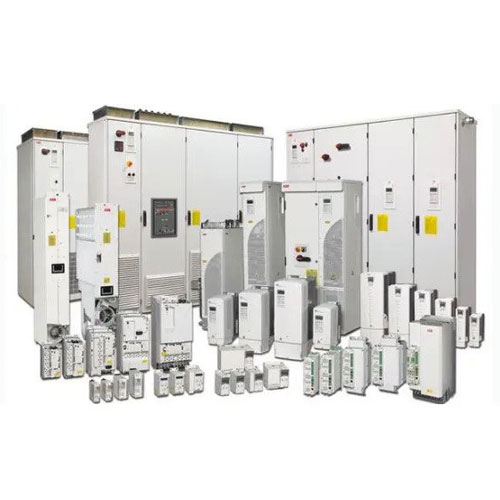
Before we get into the failures, let's quickly cover the basics. An AC drive (also called aVariable Frequency Drive or VFD) controls the speed and torque of an AC motor by varying the frequency and voltage supplied to it. Instead of running a motor at a fixed speed, an AC drive lets you ramp it up, slow it down, or hold it steady, exactly as your process demands.
This makes AC drives essential in industries like textiles, packaging, printing, pharmaceuticals, food processing, and general manufacturing. When a drive is working well, you barely notice it. When it isn't, you notice immediately, usually in the form of a stalled motor, an error code flashing on the display, or a burning smell coming from the panel.
Common ReasonsAC Drives Fail
Understanding the "why" behind a failure is the first step toward preventing it. Here are the most common culprits we come across during repair jobs.
1. Overheating
Heat is the number one enemy of any electronic drive. Dust accumulation, blocked cooling fans, poorly ventilated panels, or drives installed too close to other heat-generating equipment can all cause internal temperatures to climb. Over time, this degrades capacitors, weakens solder joints, and eventually leads to complete failure.
2. Voltage Fluctuations and Power Surges
India's industrial power supply isn't always stable, especially in areas with heavy machinery load or older electrical infrastructure. Sudden voltage spikes, dips, or surges put enormous stress on a drive's internal components, particularly the rectifier and inverter sections. A single bad surge can be enough to fry a control board.
3. Capacitor Aging
Every AC drive relies on electrolytic capacitors to smooth out the DC bus voltage. These components naturally degrade with age and heat exposure. As they weaken, you'll often notice ripple in the output, unusual noise, or intermittent shutdowns, classic signs that a drive needs professional attention before it fails completely.
4. Dust, Moisture, and Environmental Contamination
Factories in industrial belts often deal with dust, humidity, or chemical fumes in the air. When this contamination gets into a drive's enclosure, it can cause short circuits, corrosion on circuit boards, and reduced insulation resistance. This is one of the most common reasons we see failed units coming in for AC Drive Repair in Bahadurgarh, where several units operate in dusty manufacturing environments.
5. Poor Wiring and Loose Connections
Loose terminal connections, incorrect grounding, or wiring errors during installation can cause intermittent faults that are hard to diagnose without proper testing equipment. Left unaddressed, these small issues often escalate into major board-level damage.
6. Motor Overload and Mechanical Issues
Sometimes the drive itself isn't the root problem, the connected motor is drawing more current than it should due to mechanical binding, bearing wear, or overloading. This extra strain reflects back on the drive, tripping protection circuits or damaging output transistors over time.
7. Firmware and Parameter Errors
Incorrect parameter settings, corrupted firmware, or programming mistakes can also cause a drive to behave erratically, even when the hardware itself is perfectly fine. This is why proper diagnosis matters so much before any repair work begins.
Warning Signs You Shouldn't Ignore
Most drive failures don't happen overnight. There are usually warning signs well before a complete breakdown:
If you're noticing any of these signs, it's time to call in a professional rather than waiting for a full breakdown. Catching the issue early through timely AC Drive Repair in Sonipat or AC Drive Repair in Bahadurgarh can be the difference between a quick fix and a costly replacement.
Why Local, Professional Repair Makes All the Difference
AC Drive Repair in Bahadurgarh: Supporting a Growing Industrial Hub
Bahadurgarh has become a significant industrial and manufacturing belt over the years, with units spanning textiles, auto components, packaging, and general engineering. Businesses here can't afford long downtime, every hour a production line sits idle translates directly into lost revenue. That's exactly why reliable AC Drive Repair in Bahadurgarh matters so much. A local, experienced repair partner means faster turnaround, fewer logistics delays, and the ability to get an engineer on-site quickly when things go wrong.
At Advance Automation, our team regularly handles AC Drive Repair in Bahadurgarh for units ranging from small workshops to large manufacturing setups, diagnosing everything from capacitor failures to complete board-level damage.
AC Drive Repair in Sonipat: Keeping Industries Running Without Interruption
Sonipat's industrial zones face similar challenges, dust-heavy environments, fluctuating power supply, and continuous machine operation that puts real strain on electrical components. For businesses here, having access to dependable AC Drive Repair in Sonipat isn't a luxury, it's a necessity for keeping production schedules on track.
Whether it's a single AC drive that's stopped responding or a full panel that needs troubleshooting, professional AC Drive Repair in Sonipat ensures the issue is correctly diagnosed the first time, instead of being patched temporarily and failing again a few weeks later.
How Professional Repair Actually Solves the Problem
It's one thing to say "get it repaired," but what does that process actually look like when it's done right? Here's how a proper repair job typically unfolds.
Step 1: Detailed Fault Diagnosis
The first and most important step is identifying the actual root cause, not just the symptom. This involves visual inspection, component-level testing, checking capacitor health, testing IGBTs and rectifier modules, and reviewing any stored fault codes. Skipping this step is exactly how businesses end up paying for repeated repairs on the same unit.
Step 2: Component-Level Repair, Not Just Replacement
A well-equipped repair service doesn't just swap the entire board at the first sign of trouble. Skilled technicians identify the exact failed component, whether it's a capacitor, a driver IC, a power transistor, or a control board, and repair at that specific level. This keeps costs down and often gets equipment back into service faster than waiting for a full replacement unit to arrive.
Step 3: Load Testing Under Real Conditions
Once repaired, the drive isn't simply sent back out the door. It needs to be tested under simulated load conditions to confirm it performs exactly as it should, matching the original speed, torque, and stability parameters.
Step 4: Preventive Recommendations
A good repair partner doesn't stop at fixing the immediate fault. They'll also flag environmental or installation issues, like poor ventilation, unstable voltage, or incorrect wiring, that could cause the same failure again if left unaddressed.
Repair vs. Replacement: Which Makes More Sense?
This is a question we hear constantly, and the honest answer is: it depends on the extent of the damage. That said, in the majority of cases, repair is the smarter choice:
Of course, there are cases where a drive is damaged beyond economical repair, and an honest service provider will tell you that upfront instead of trying to push unnecessary work.
Why ChooseAdvance Automation for AC Drive Repair
With over two decades of hands-on experience in industrial automation, Advance Automation has built a reputation across Delhi NCR for dependable, honest, and technically sound repair work. Here's what sets us apart:
We understand that every hour your machinery sits idle costs you money, which is why our approach is built around speed without cutting corners on quality. If you'd like to explore our complete range of repair capabilities, take a look at our service page or reach out through our contact page to get a quick diagnosis started.
Preventive Maintenance Tips to Extend Drive Life
While repair services are there when you need them, a little preventive care goes a long way in avoiding failures altogether:
Final Thoughts
AC drives are the quiet workhorses of industrial automation, and their failure, whether due to overheating, power fluctuations, aging components, or environmental factors, can bring operations to a costly standstill. The good news is that most failures are entirely repairable when handled by experienced professionals who understand the internal workings of these systems.
Whether you're dealing with a drive that's tripping intermittently or one that's completely unresponsive, don't rush into replacing it before getting a proper diagnosis. For businesses across the region, dependable AC Drive Repair in Bahadurgarh and AC Drive Repair in Sonipat from a trusted partner like Advance Automation can mean the difference between a quick, affordable fix and an unplanned capital expense.
Got a drive that's giving you trouble? Get in touch with Advance Automation and let our engineers take a look before you consider replacement.
Frequently Asked Questions
1. How do I know if my AC drive needs repair or replacement? If the drive is showing intermittent faults, error codes, or performance issues but the core components (like the main power board) are intact, repair is usually the more practical and cost-effective option. A proper diagnostic test can confirm this before any decision is made.
2. How long does professional AC drive repair usually take? Turnaround time depends on the extent of the damage, but most common faults like capacitor failure, IGBT damage, or control board issues can typically be diagnosed and repaired within a few working days.
3. Can all brands of AC drives be repaired? Yes, in most cases. Experienced repair providers, including Advance Automation, work with drives from major manufacturers like Yaskawa, Mitsubishi, Delta, Siemens, ABB, and Danfoss, among others.
4. What causes an AC drive to trip repeatedly? Repeated tripping is often caused by overheating, overload on the connected motor, voltage instability, or a failing capacitor. A detailed diagnostic check is needed to pinpoint the exact cause.
5. Do you provide on-site AC Drive Repair in Bahadurgarh and Sonipat, or is it only workshop-based?Advance Automation offers both options depending on the nature of the fault. Simple issues can often be resolved on-site, while more complex board-level repairs are handled at our fully equipped facility for precise diagnosis and testing.
6. Is repairing an AC drive as reliable as buying a new one? Yes, when done by qualified technicians. A properly repaired drive undergoes load testing and quality checks to ensure it performs to original specifications, often at a fraction of replacement cost.
7. How can I prevent frequent AC drive failures in my facility? Regular cleaning, proper ventilation, voltage stabilization, and periodic professional inspections go a long way in preventing premature failures and extending the operational life of your drives.