
Find Us Our Location
- Plot no.1, Gali No.1, Gemini park, Nangli Sakrawati Najafgarh, New Delhi 110043
- [email protected]
- +91-9810765783

If you run a factory or manage a production line, you already know the drill — machines break down at the worst possible time, labour costs keep climbing, and even a few hours of downtime can throw an entire production schedule into chaos. This is exactly why more and more manufacturing units across Delhi NCR are turning to industrial automation, not as a luxury, but as a necessity for staying profitable.
Industrial automation isn't just about robots and fancy control panels. At its core, it's about using drives, PLCs, HMIs, and control systems to make production faster, more accurate, and far less dependent on manual effort. And when these automation components are properly maintained and repaired on time, the cost savings multiply. That's where a reliable service partner like Advance Automation comes into the picture, helping industries across Delhi, Manesar, Bhiwadi, Bahadurgarh, and Sonipat keep their automation systems running smoothly instead of replacing expensive equipment every time something goes wrong.
In this article, we'll break down exactly how industrial automation cuts manufacturing costs, why timely repair and maintenance matters more than most factory owners realise, and why services like AC Drive Repair in Bahadurgarh and AC Drive Repair in Sonipat have become so important for local industries.
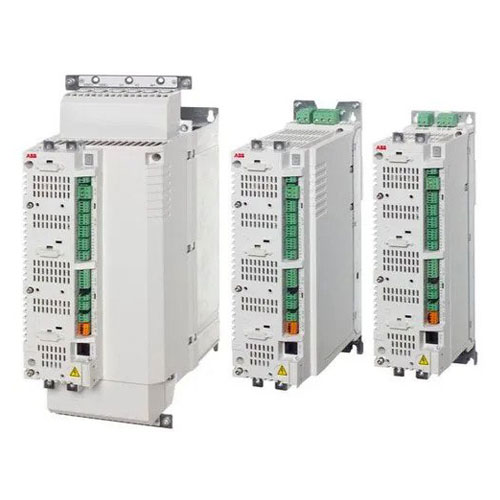
Industrial automation refers to the use of control systems — like AC drives, servo drives, PLCs (Programmable Logic Controllers), and HMIs (Human Machine Interfaces) — to operate machinery and processes with minimal human intervention. Instead of a worker manually adjusting motor speed or monitoring pressure gauges all day, an automated system does it continuously, accurately, and without fatigue.
This shift changes everything for a manufacturing unit:
But here's the catch — automation only saves money when the equipment driving it is healthy. A faulty AC drive or a malfunctioning servo drive can actually cost a factory more than manual operations would, which is why regular servicing and fast repair support are non-negotiable.
The Real Ways Automation Reduces Manufacturing Costs
1. Lower Energy Consumption
One of the biggest hidden costs in any factory is electricity. Traditional motors often run at full speed regardless of actual load requirements, wasting a huge amount of power. AC drives (also known as Variable Frequency Drives) solve this by adjusting motor speed based on real-time demand. A conveyor belt that doesn't need to run at full speed during low production hours simply won't — and that alone can cut energy bills significantly.
However, an AC drive that's aging or partially damaged loses this efficiency. It might trip frequently, overheat, or fail to regulate speed properly, pushing energy costs right back up. This is why industries in Haryana increasingly search for dependable AC Drive Repair in Bahadurgarh whenever their drives start showing signs of inefficiency, rather than waiting for a complete breakdown.
2. Reduced Labour Dependency
Automated systems handle repetitive, time-consuming tasks that would otherwise require multiple workers across shifts. This doesn't necessarily mean job losses — it usually means the same workforce can be redirected to quality checks, supervision, and higher-value tasks, while machines handle the repetitive grind. Over time, this reduces overtime costs, training costs for repetitive-task workers, and the risk of human error on the production line.
3. Minimised Downtime and Faster Recovery
Unplanned downtime is one of the most expensive problems a manufacturing unit can face. Every minute a production line is down, you're paying for idle labour, missed delivery deadlines, and potential penalty clauses with clients. Automation systems, when properly maintained, are far more predictable than manual processes — but when a drive, PLC, or HMI does fail, getting it repaired quickly is everything.
This is precisely the gap that Advance Automation fills for industries around Delhi NCR. Instead of waiting weeks for a replacement part from an OEM, local businesses can get their AC drives, servo drives, and PLC panels diagnosed and repaired within days, sometimes with on-site support. Quick turnaround directly translates into lower downtime costs.
4. Better Material Utilisation and Lower Wastage
Automated systems are far more precise than manual operations. A servo-controlled cutting or packaging machine, for instance, wastes far less raw material than a manually operated one because the movements are programmed and repeatable. Less wastage means better margins, especially in industries like packaging, wire and cable manufacturing, and printing — all sectors where precision control makes a visible difference in the monthly material bill.
5. Extended Equipment Lifespan
Contrary to popular belief, buying a brand-new drive or PLC every time something malfunctions is not the most cost-effective route. Most AC drives and servo drives can be repaired and restored to near-original performance at a fraction of replacement cost. This is one of the most underrated ways automation reduces manufacturing costs — not by avoiding maintenance, but by choosing repair over replacement wherever technically feasible.
Factories in industrial belts like Sonipat, known for their textile, auto-parts, and general machinery units, regularly rely on professional AC Drive Repair in Sonipat services to extend the working life of their existing drives instead of investing in costly new units every couple of years.
6. Predictable Maintenance Budgets
When you have a trusted repair partner handling your AC drives, servo drives, HMIs, and PLC panels, maintenance stops being a random, panic-driven expense and becomes a planned, budgeted activity. This predictability alone helps manufacturing units plan their finances better, avoid emergency procurement at inflated prices, and negotiate better annual maintenance contracts.
Why Drive Repair Specifically Plays Such a Big Role in Cost Reduction
AC drives and servo drives are the heart of most automated machinery — they control motor speed, torque, and direction with precision. When a drive fails or underperforms, the entire production line built around it suffers. Common issues include:
Each of these issues, left unaddressed, doesn't just stop production — it often damages connected motors and mechanical components too, multiplying repair costs. This is why industries increasingly prefer proactive servicing over reactive firefighting.
For companies operating in Haryana's industrial clusters, having quick access to AC Drive Repair in Bahadurgarh means a malfunctioning drive doesn't sit idle for days waiting for a technician to travel from Delhi. Similarly, textile and manufacturing units around the NCR periphery benefit from local AC Drive Repair in Sonipat support that understands the specific voltage fluctuations and dust-related issues common to that belt.
How Advance Automation Supports Cost-Effective Manufacturing
With years of hands-on experience across Delhi NCR, Manesar, Bhiwadi, Bahadurgarh, and Sonipat, the team at Advance Automation follows a structured process for every PLC repair job:
By keeping this equipment functional rather than letting factories default to full replacements, Advance Automation helps its clients keep capital expenditure low while still enjoying the cost benefits that come from a properly automated production line. You can check their full range of offerings on the Service page, or explore product-specific support through their Our Products section, which also covers brand-specific pages like ABB Products,Delta Products, and Messung Products , danfoos product .
Local Repair Support: Why It Matters for Bahadurgarh and Sonipat Industries
Bahadurgarh and Sonipat are both fast-growing industrial regions with a mix of textile units, general machinery manufacturers, packaging companies, and auto-component industries. These belts run on tight production schedules, and even a single day of drive downtime can disrupt an entire supply chain commitment.
Choosing a service provider that specifically offers AC Drive Repair in Bahadurgarh means faster diagnostic visits, shorter transit time for damaged units, and technicians who already understand the common power quality issues in that region — such as voltage sags during peak industrial load hours. The same logic applies to units seeking AC Drive Repair in Sonipat, where humidity and dust levels in certain manufacturing environments tend to accelerate wear on drive components, particularly cooling fans and power modules.
Rather than shipping a damaged drive to a distant city and waiting weeks, factories in these belts can rely on a nearby, experienced team to inspect, repair, and return the unit — keeping the automation-driven cost savings intact instead of losing them to downtime.
A Simple Cost Comparison: Repair vs Replacement
To put things in perspective, here's a rough picture of how repair-focused maintenance compares to a replace-everything approach.
When you choose to repair a faulty drive or control component instead of replacing it outright, the upfront cost is usually low to moderate, and the turnaround time is a matter of days rather than the weeks it often takes to import or procure a brand-new unit. Repaired equipment also retains its original calibration, so there's no need for reprogramming or retraining staff on a new system. Over time, this approach leads to noticeably higher savings, especially when paired with regular servicing, and it also cuts down on electronic waste.
A full replacement, on the other hand, comes with a much higher upfront cost and longer waiting periods due to procurement delays. New units often require reconfiguration and time for the team to get familiar with them again, and the repeated capital spending adds up over the years. It also generates more electronic waste, which isn't ideal from a sustainability standpoint either.
This is exactly why experienced service providers focus on diagnostics and repair first, reserving replacement only for components that are truly beyond economical repair.
Practical Tips to Maximise Cost Savings from Automation
Following even a few of these practices can meaningfully extend the life of your automation equipment while keeping unplanned costs under control.
Final Thoughts
A PLC fault doesn't have to mean a full system replacement, a massive repair bill, or days of lost production. Most issues — power supply faults, I/O errors, communication breakdowns, or memory corruption — can be diagnosed accurately and repaired at the component level by technicians who know what they're looking for. This is exactly the kind of targeted, cost-conscious repair approach that has made Advance Automation a trusted name for PLC Repair Services across Delhi NCR and the surrounding industrial belts.
If your production line is showing early signs of a PLC fault — flickering indicators, intermittent output failures, or unexplained communication drops — it's worth getting it inspected before the problem grows. Visit the Advance Automation homepage to explore the full range of repair services, or head straight to the Contact Us page to schedule a diagnostic visit.
Frequently Asked Questions (FAQs)
1. What are the most common signs that a PLC needs repair? Flickering status LEDs, intermittent communication errors, unresponsive outputs, unexpected restarts, and error codes on the CPU display are the most common early warning signs of a developing PLC fault.
2. Can a PLC be repaired, or does it always need to be replaced? In most cases, a PLC can be repaired at the component level — power supply, I/O module, CPU, or communication port — without needing a full system replacement, which saves both cost and reprogramming effort.
3. How long does a typical PLC repair take? Turnaround time depends on the complexity of the fault, but most common issues like power supply failures or I/O module faults can usually be diagnosed and repaired within a few days.
4. Do PLC Repair Services cover all brands? Yes, experienced providers like Advance Automation work across major PLC brands including Siemens, ABB, Delta, Mitsubishi, Schneider, and Messung, each requiring slightly different diagnostic approaches.
5. What causes a PLC to lose its stored program? Sudden power loss, battery failure inside the module, or static discharge can corrupt or wipe the stored program. Keeping a regular backup significantly reduces the impact of this fault.
6. Is it worth doing preventive maintenance on a PLC, or should I just wait for it to fail? Preventive maintenance — cleaning panels, checking wiring, and monitoring power quality — is far more cost-effective than reactive repairs, since it catches early wear before it turns into a full failure.
7. How do I know if my PLC issue is actually caused by a connected drive or HMI instead? Since PLCs, drives, and HMIs often work together on the same line, a fault in one can show symptoms in another. A proper diagnostic check across the connected systems helps isolate the real source of the problem.
8. How can I get my PLC inspected by Advance Automation? You can visit the Contact Us page on the Advance Automation website or call their support team directly to schedule a diagnostic visit for your PLC or connected control systems.